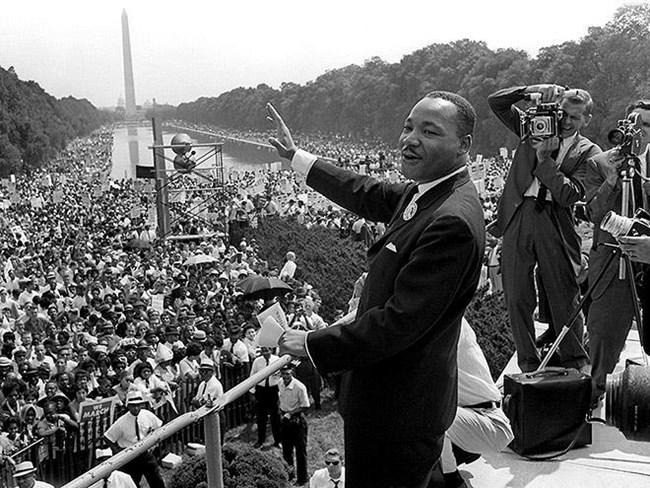
Martin Luther King Jr delivering "I Have a Dream" speech on August 28, 1963
I spent much of yesterday—the Martin Luther King Jr. holiday—leaning back and reflecting on just how different my life would look if it weren't for the man we were honoring. It’s easy to treat these holidays as a welcome break from the grind, but as I sat there, I couldn't help but connect the dots between Dr. King’s struggle and my own career path. For those of us in the thick of it—writing code, managing sprints, or steering global tech giants—this day isn't just a historical footnote. It’s the foundational reason many of us have a seat at the table in the first place.
As an immigrant from India who has navigated the halls of major tech firms and felt the weight of founding companies, I found myself struck by a piercing question: What if he hadn't succeeded?
If the Civil Rights Movement hadn’t broken the back of institutionalized segregation, the America we know today would be unrecognizable. For the South Asian diaspora, the "American Dream" would likely have remained a locked vault.
While forces like globalization, post-war economic expansion, and the dominance of U.S. higher education created the engine for growth, it was the moral and legal victory of the Civil Rights Movement that provided the high-octane fuel: The Global Innovation Pipeline.
The Immigration and Nationality Act of 1965 was a direct legislative descendant of the momentum Dr. King created. Before this, the U.S. used a quota system that heavily favored Western Europeans and effectively barred the rest of the world. Without the foundational shift he pioneered:
We often speak of the tech industry as the ultimate meritocracy, but the truth we must face is that meritocracy is a myth in a segregated society. You cannot claim the "best person won" if half the world wasn't allowed to enter the stadium. Segregation doesn't just exclude people; it creates closed-loop networks where "merit" is defined by who you know rather than what you can build.
While many historical factors contributed to America's rise, Dr. King’s work remains the most critical catalyst. He provided the "system update" that allowed American opportunity to finally interface with global talent. Without it, the U.S. would have struggled to secure its position as the global epicenter of innovation, as it would have remained closed off to the very minds that now drive it.
Beyond demographics, Dr. King’s philosophy offers a masterclass in leadership that remains painfully relevant in our boardrooms and Zoom calls. In my experience, tech companies don't usually fail because of bad code; they fail because of leadership cowardice. We see it often: executives who avoid "difficult" conversations to maintain a facade of harmony, or managers who prioritize their own comfort over the team’s psychological safety.
"The ultimate measure of a man is not where he stands in moments of comfort and convenience, but where he stands at times of challenge and controversy." — Dr. Martin Luther King Jr.
In the corporate world, there is a dangerous gravity toward "polite" consensus. We see leaders "managing expectations" rather than managing talent. Dr. King challenged this directly:
"A genuine leader is not a searcher for consensus but a molder of consensus."
For a Senior Executive, this means having the courage to pivot a failing product or change a toxic culture, even when the "safe" path is to stay silent.
In tech, we often think being "neutral" is professional. But when a team is struggling or a company's values are being compromised, silence is a choice.
"Our lives begin to end the day we become silent about things that matter."
When leaders retreat into "carefully calibrated ambiguity" to protect their own reputations, they leave their institutions without ballast. Trust erodes, and the best engineers—the ones who value integrity—are the first to leave.
For a founder or a manager facing a "Series B" crunch or a massive system outage, King’s words on perseverance are a blueprint for resilience:
"If you can't fly then run, if you can't run then walk, if you can't walk then crawl, but whatever you do you have to keep moving forward."
As software engineers, managers, and executives, we are the architects of the future. But we must remember that we build on a foundation laid by those who marched when it wasn't safe to do so.
We owe it to that legacy to be more than just "high-performers." We must be leaders who take the hard stands, who protect the meritocracy we've inherited, and who continue to attract and empower the next generation of global innovators, no matter where they were born.
Yesterday’s holiday was a reminder that I’m not just grateful for the dream—I’m grateful for the reality that allowed me, and so many others, to call this industry home.

Flexible deployment - Self hosted or on BaseRock Cloud

.png)