Open this article in your favorite AI assistant and get key insights instantly.
Introduction
In today’s fast-paced digital landscape, delivering high-quality software across devices, regions, and user scenarios is non-negotiable. Traditional in-house QA teams often struggle to replicate real-world usage conditions at scale. This is where crowdtesting steps in—a modern software testing approach that leverages a global pool of real users to test applications in real-world environments. By tapping into diverse devices, locations, and user behaviors, crowdtesting helps teams uncover issues that conventional testing often misses.
Crowdtesting is a modern software testing approach where real users test applications in real-world environments using their own devices, networks, and locations.
What is Crowdtesting?
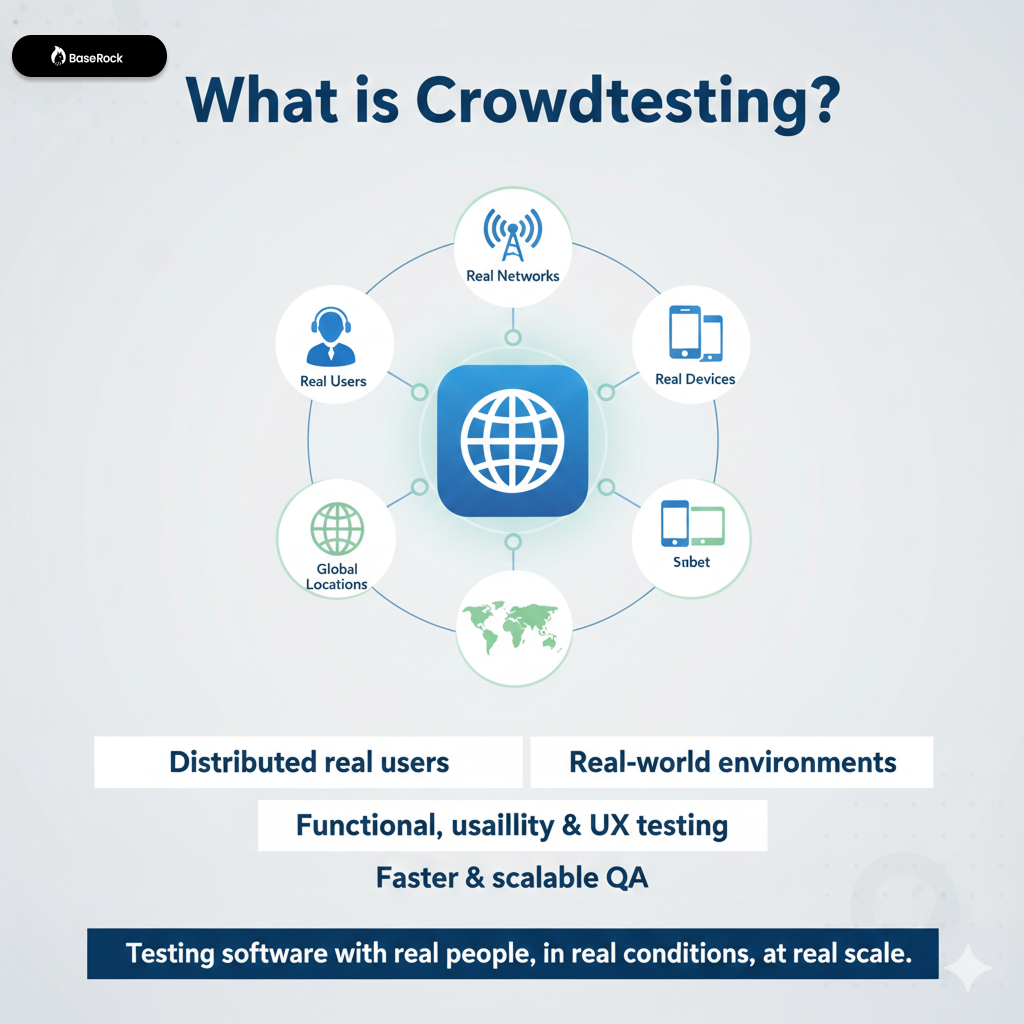
Crowdtesting (also known as crowdsourced testing or crowdtest) is a testing methodology where software applications are evaluated by a distributed group of external testers rather than only an internal QA team. These testers use real devices, operating systems, networks, and accessibility settings, providing authentic feedback on functionality, usability, and performance.
In simple terms, if you’re wondering what is crowdtesting, it’s testing your product with real people, in real conditions, at real scale.
Key Benefits of Crowd Testing
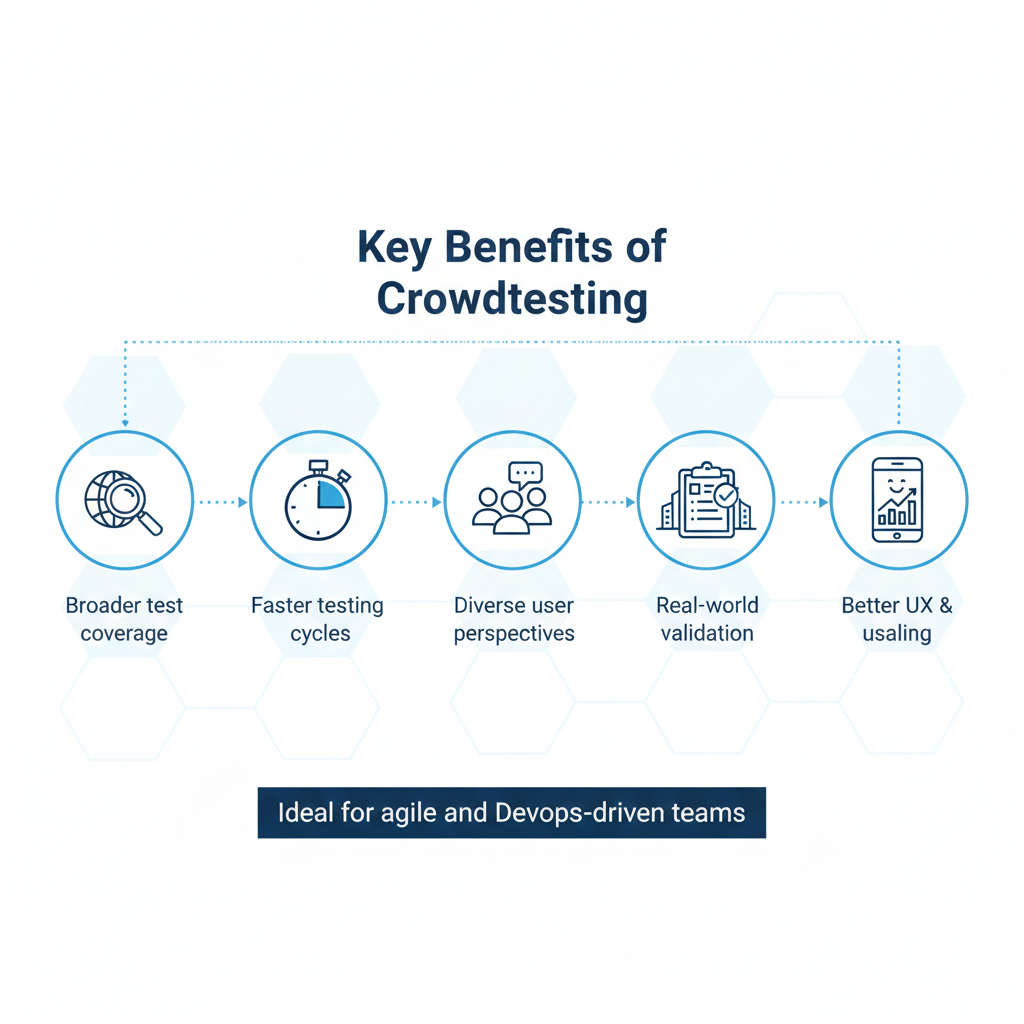
Crowdtesting has become a go-to strategy for modern QA teams due to its powerful advantages:
Broader Test Coverage – Test across thousands of device, OS, browser, and network combinations.
Faster Testing Cycles – Parallel testing by a global crowd significantly reduces test execution time.
Diverse User Perspectives – Get feedback from users with different languages, cultures, and accessibility needs.
Real-World Validation – Identify issues that only appear in live, unpredictable environments.
Improved Usability & UX – Gain insights into how real users interact with your application.
Reduced Dependency on In-House QA – Scale testing without hiring or maintaining large internal teams.
Why Use Crowdtesting?
Organizations adopt crowdtesting to stay competitive and ship confidently. Here’s why it works so well:
Uncover Edge-Case Defects that scripted tests and emulators often miss
Validate User Experience with real behavioral insights, not assumptions
Accelerate Time to Market by shortening QA cycles
Scale Cost-Effectively without expanding internal QA infrastructure
For companies offering application crowdtesting services, this approach enables on-demand, flexible, and highly scalable testing—perfect for agile and DevOps-driven teams.
How to Perform Crowdtesting?
Running a successful crowdtesting initiative requires structure and clarity. Here’s a step-by-step approach:
Define Test Objectives – Clearly outline what you want to test (features, usability, localization, etc.).
Select a Crowdtesting Platform – Choose a tool or partner with strong tester diversity and reporting.
Prepare Test Scenarios – Write clear test cases, acceptance criteria, and expected outcomes.
Onboard Testers – Share instructions, access details, and timelines with the testing crowd.
Execute Tests – Testers run scenarios on real devices in real environments.
Modern QA teams often combine crowdtesting with AI-powered test automation platforms like BaseRock.ai to create a hybrid strategy—real-user validation plus intelligent automated coverage.
Types of Crowdtesting
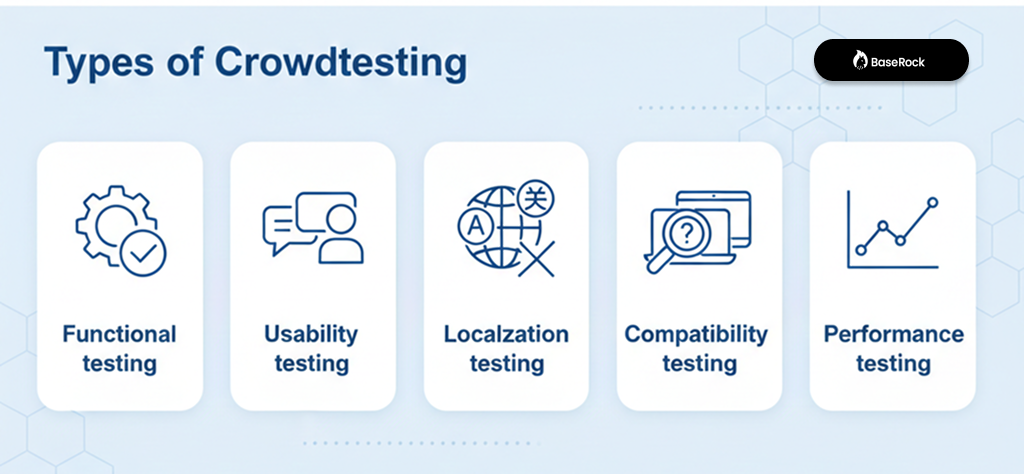
Different goals require different types of crowdtesting. The most common include:
Each type is most effective when used at the right stage of the development lifecycle.
How to Choose the Right Crowdtesting Tool?
Selecting the right crowdtesting platform can make or break your results. Evaluate tools based on:
Tester Diversity & Geography
Device and OS Coverage
Quality of Bug Reports (logs, screenshots, videos)
Security & NDA Compliance
Integrations with CI/CD, Jira, GitHub, etc.
Scalability & On-Demand Access
Cost Transparency
For teams aiming to modernize QA, combining crowdtesting tools with intelligent automation platforms ensures both speed and depth of coverage.
Best Practices for Modern Crowdtesting
To get the most out of crowdtesting, follow these best practices:
Provide clear and detailed test instructions in case of planned tests
Define well-scoped acceptance criteria
Screen and segment testers based on skills and demographics
Maintain open communication during test cycles
Review feedback promptly and prioritize critical defects
Continuously refine test cases based on insights and outcomes
When paired with AI-driven test generation and maintenance, these practices significantly boost QA efficiency.
Conclusion
Crowdtesting plays a vital role in modern software development by bridging the gap between controlled test environments and real-world usage. By leveraging real users, diverse environments, and scalable testing models, organizations can deliver more reliable, user-centric products. When combined with intelligent QA platforms like BaseRock.ai, crowdtesting becomes a powerful pillar of a future-ready testing strategy—ensuring speed, quality, and confidence at every release.
Ready to Test Smarter?
Looking for reliable crowdtesting services? Connect with our QA experts to test your application across real users and devices. Talk to Our QA Team
FAQ
What is crowdtesting? Crowdtesting is a software testing approach where a distributed group of external testers evaluates applications in real-world environments.
How does crowdtesting work? Organizations define test goals, deploy tasks to a crowdtesting platform, and receive real-user feedback, bug reports, and usability insights.
When should you use crowdtesting? Crowdtesting is ideal before major releases, during UX validation, for localization checks, and when testing across diverse devices and regions.
Are crowdtesting tools secure? Yes. Reputable crowdtesting tools use NDAs, data masking, secure access controls, and compliance standards to protect sensitive information



.png)