In the fast-paced world of software development, a single line of code can be the difference between a seamless user experience and a digital disaster. As applications become more complex in 2026, the need for a structured way to manage these "digital pests" is no longer optional—it's foundational.
This guide explores the essentials of a bug tracking system, why it’s the backbone of high-quality software, and how to choose the best bug tracking tools for your team.
A bug tracking system (or defect tracking system) is a centralized software application designed to help development teams identify, record, manage, and resolve software defects throughout the entire development lifecycle.
Think of it as the "command center" for quality. Instead of letting errors get lost in Slack threads or spreadsheets, a bug tracking system ensures that every issue is documented with specific technical data, from the moment it’s discovered by a functional testing specialist to the moment a developer pushes a fix.
Why invest in a dedicated system for tracking bugs? Without one, technical debt accumulates, and product quality plateaus.
At BaseRock.ai, we believe in a simple truth: Every bug found in production is a miss from your test automation. While a bug tracking system is essential for managing defects, the goal should always be to prevent them from reaching production in the first place. This requires a modern, comprehensive QA automation platform integrated directly into your SDLC.
The process of tracking bugs follows a standardized lifecycle to ensure nothing slips through the cracks.
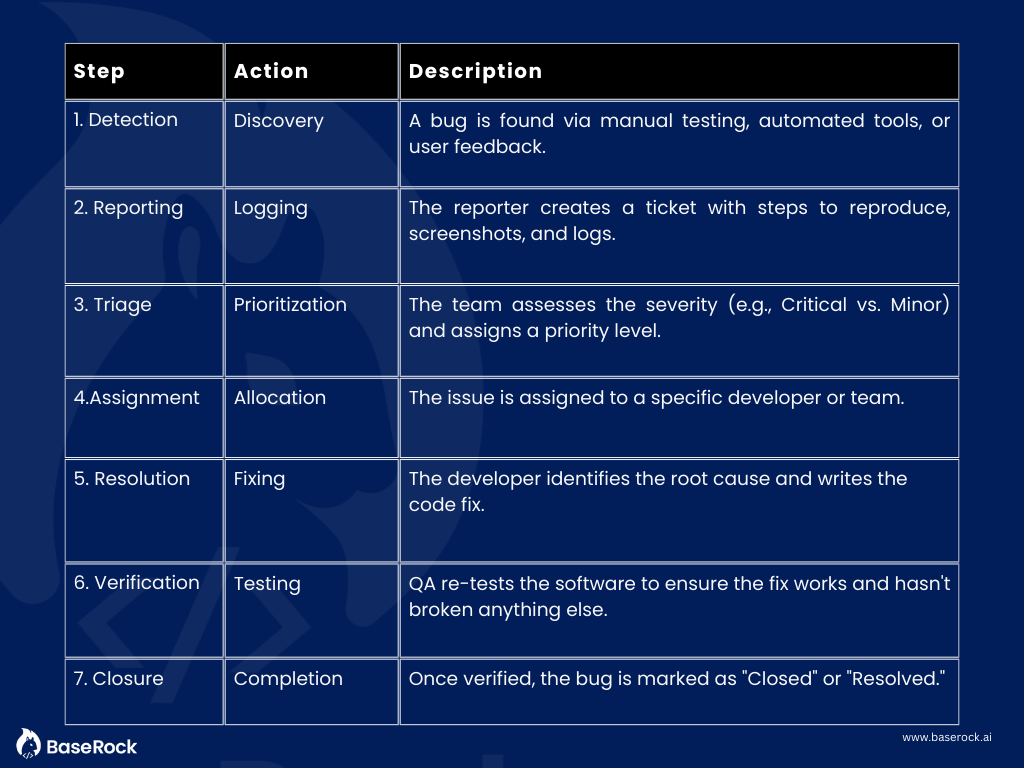
Pro Tip: In 2026, the "Detection" phase is being revolutionized by agentic QA. Platforms like BaseRock.ai can autonomously identify defects and automatically populate your bug tracking system with technical logs, saving your team hours of manual data entry.
A bug tracking tool is the actual software interface used to execute the system described above. While the system is the process, the tool provides the features—such as Kanban boards, automated workflows, and integration with version control (like GitHub or Bitbucket)—that make the process efficient.
Effective software bug tracking tools allow you to:
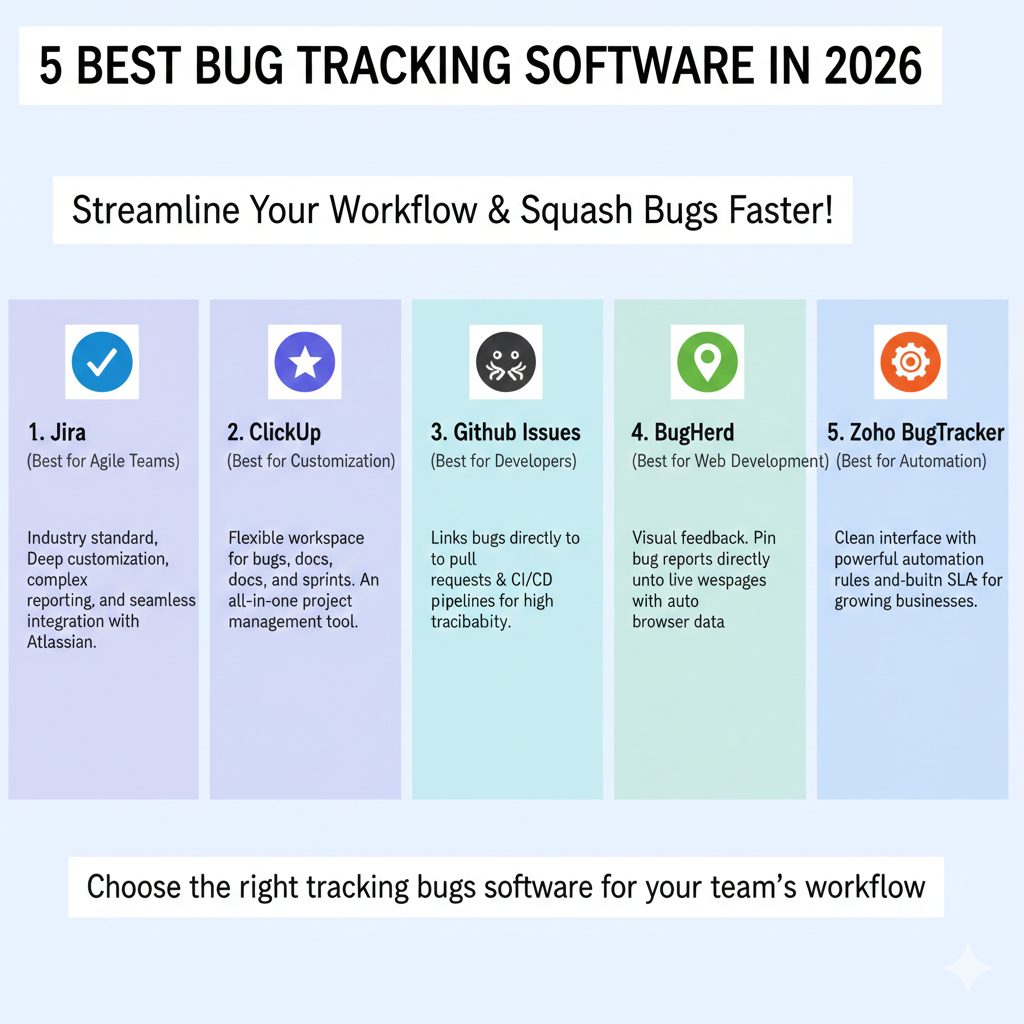
Choosing the right tracking bugs software depends on your team's size and specific workflow requirements.
Jira remains the industry standard for tracking bugs in Jira within an Agile framework. It offers deep customization, complex reporting, and seamless integration with the broader Atlassian ecosystem.
ClickUp is a highly flexible workspace that allows teams to manage bugs alongside docs and sprints. It’s ideal for teams that want a "one-stop-shop" for project management and issue tracking.
For open-source projects or dev-centric teams, GitHub is a top-tier bug tracking tool. It links bugs directly to pull requests and CI/CD pipelines, ensuring high traceability.
BugHerd stands out for its visual feedback. Users can "pin" a bug report directly onto a live webpage, automatically capturing browser and OS data, which makes it a favorite for front-end teams.
Zoho offers a clean, user-friendly interface with powerful automation rules and built-in SLAs, making it a great bug tracking system for growing businesses.
Selecting the right tool is only half the battle. To stop the cycle of endless bug fixing, you must evaluate how these tools integrate with your automation:
Don't just track bugs—eliminate the "misses." To ensure your SDLC is resilient, you need more than just a place to store tickets. You need a comprehensive QA strategy.
1. What is a bug tracking system?
It is a process and software framework used to log and monitor software errors from discovery to resolution.
2. Which teams use bug tracking systems?
Primarily QA testers and developers, but product managers and customer support teams also use them to track user-reported issues.
3. Is a bug tracking system suitable for small teams?
Yes. Even for a one-person project, a tracker is better than memory. Many tools offer free tiers for teams under 10 members.
4. What is the difference between a bug tracking tool and a bug tracking system?
The system is the overall workflow and methodology, while the tool is the specific software (like Jira or ClickUp) used to manage that workflow.
If bugs are reaching your end-users, your automation needs an upgrade. Stop settling for "good enough" testing and start building a more resilient SDLC.
Request a demo with BaseRock today and see how our modern QA automation platform helps you build better, bug-free software.

Flexible deployment - Self hosted or on BaseRock Cloud

.jpg)