In 2026, software quality is no longer just a competitive advantage—it’s a baseline expectation. As applications grow more complex and release cycles accelerate, the best automated software testing tools have become a foundational practice for modern QA teams. Automation enables organizations to test faster, release more frequently, and maintain reliability across web, mobile, and enterprise applications.
Automated software testing tools are software solutions that execute test cases automatically to validate application functionality, performance, security, and stability. Instead of relying solely on manual testing, these tools simulate user actions, validate expected outcomes, and report defects with minimal human intervention.
Modern automation tools integrate seamlessly with CI/CD pipelines, enabling continuous testing throughout the development lifecycle. This makes them essential for teams adopting Agile, DevOps, and AI-native engineering practices.
Using the best software testing automation tools delivers measurable advantages for QA and engineering teams:
These benefits make automation a core pillar of modern QA strategies in 2026.
Below are five of the best automated software testing tools widely adopted by QA teams in 2026:
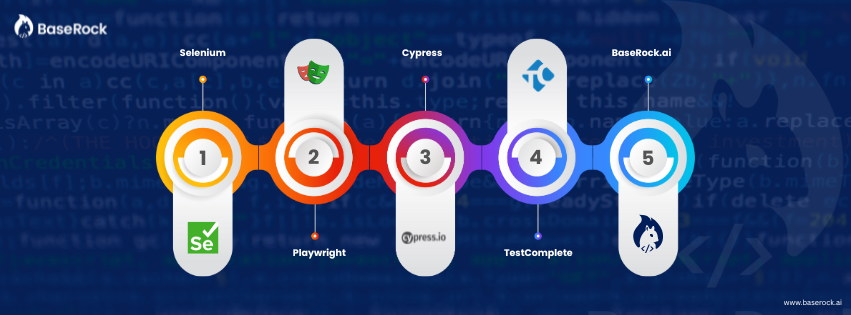
Best for: Teams with experienced automation engineers and custom frameworks.
Best for: Modern web applications with complex UI interactions.
Best for: Frontend-focused teams and JavaScript-heavy applications.
Best for: Large enterprises with diverse application ecosystems.
Best for: Teams looking to scale QA efficiently with AI-driven automation.
Best for: QA teams and fast-moving product teams looking for simple, scalable automated testing without complex setup.
Traditional automation tools rely heavily on scripts that break whenever applications change. Baserock.ai transforms this model by introducing AI-native, autonomous testing.
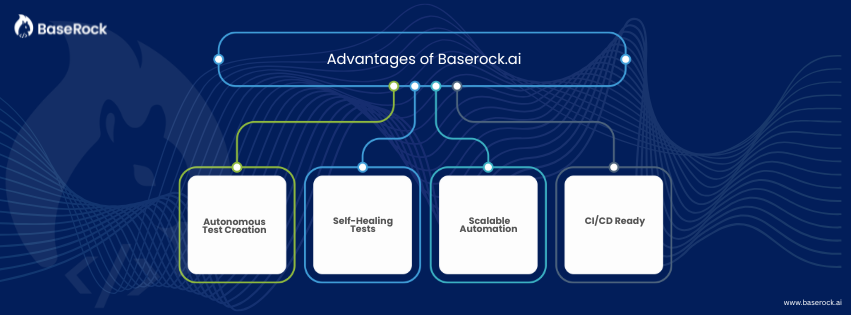
Key advantages of Baserock.ai include:
For QA teams in 2026, Baserock.ai represents a shift from tool-based automation to intelligent QA orchestration, helping teams release faster without compromising quality.
As software systems grow more dynamic, the best automated software testing tools are critical to delivering high-quality products at speed. While traditional tools like Selenium, Playwright, and Cypress remain valuable, the industry is rapidly moving toward AI-driven automation.
Platforms like Baserock.ai are leading this transformation—reducing test maintenance, improving coverage, and enabling QA teams to scale effortlessly. In 2026 and beyond, AI-powered testing isn’t just the future—it’s the standard.
Get started with BaseRock.ai and accelerate AI-powered test automation today
Get Started
1.What is an automated testing tool in software testing?
An automated testing tool is software that executes test cases automatically to validate functionality, performance, and stability without manual intervention.
2.Which are the top automated testing tools?
Some of the best software automation testing tools in 2026 include Selenium, Playwright, Cypress, TestComplete, and AI-driven platforms like Baserock.ai.
3.What features should modern automation tools have?
Modern tools should offer CI/CD integration, scalability, cross-platform support, minimal maintenance, and AI-powered capabilities such as self-healing and autonomous test generation.

Flexible deployment - Self hosted or on BaseRock Cloud

.jpg)